Dearly Heart: A Handwritten Calligraphy Script for Elegant Branding
I opened a blank document on my monitor, the cursor blinking in the top left corner. The brief was simple but demanding: create a visual identity for a new artisanal skincare line that emphasizes natural ingredients and gentle self-care. The client wanted something that felt personal, warm, and undeniably romantic, without slipping into cliché or looking overly ornate. This is where Dearly Heart caught my eye.
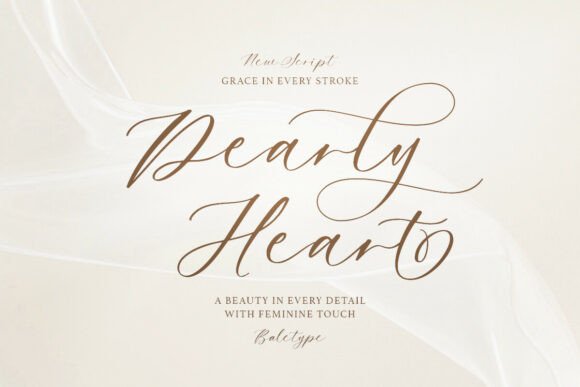
As a graphic designer working within the Script Amp category of Fonts, I am constantly testing typefaces that balance legibility with artistic flair. Dearly Heart isn’t just another decorative script; it is a handwritten calligraphy script designed with an elegant and romantic touch. When I first placed it on the canvas, the immediate effect was one of sophistication. The flowing curves and graceful strokes brought an instant warmth to the layout, transforming a sterile digital space into something inviting and tactile.
The Personality of Dearly Heart
What sets Dearly Heart apart from other creative font options is its nuanced personality. It doesn’t shout; it whispers. The letterforms have a natural rhythm, mimicking the pressure and release of a real brush or fountain pen. This makes it ideal for brands that want to communicate intimacy and care. In the context of our skincare project, this tone was perfect. We weren’t selling harsh chemicals or aggressive results; we were selling a moment of peace.
The font’s visual characteristics are defined by its fluidity. There are no rigid angles or stiff lines. Instead, every connection between letters feels organic. This is crucial for logo design and brand identity work because it allows the typography to act as a visual signature rather than just text. When used correctly, Dearly Heart elevates the perceived value of a product, adding a layer of luxury that consumers respond to emotionally.
From Mockup to Brand Identity
My process began with exploring how Dearly Heart could function as the primary display font. I started by placing it on a large-scale poster mockup. The headline read "Gentle Care," and the script flowed beautifully across the width of the page. However, I quickly realized that while it works exceptionally well as a headline font or logo font, it needs support. Using it for body text would overwhelm the reader and hurt readability.
This led me to focus on font pairing. To ground the elegance of Dearly Heart, I paired it with a clean, modern sans serif font for the informational content. The contrast between the flowing script and the structured sans serif created a dynamic visual hierarchy. The script drew the eye, creating emotional engagement, while the sans serif provided clarity and professionalism. This combination ensured that the brand remained accessible, not just beautiful.
- Logo Design: Dearly Heart shines when used for short names or taglines. Its unique character shapes make it memorable and distinct.
- Packaging Design: On product labels, the script adds a handcrafted feel that resonates with buyers of handmade or artisanal goods.
- Social Media Graphics: For Instagram posts or Pinterest pins, the font serves as a powerful accent, grabbing attention in a crowded feed.
Practical Applications in Real Projects
Testing Dearly Heart in various contexts revealed its versatility. I applied it to business card designs, where it looked stunning as a nameplate against a textured paper background. The romantic touch of the font complemented the tactile nature of the cardstock, reinforcing the brand’s commitment to quality.
In editorial design, such as lookbooks or catalogues, Dearly Heart can be used for pull quotes or section headers. It breaks up dense text and adds a editorial flair that feels curated and thoughtful. I also experimented with using it on website headers. While full sentences are too long, a single-word hero title in Dearly Heart can set a strong mood before the user scrolls down to read the details in a more neutral typeface.
For packaging design, particularly for small businesses like candle makers or boutique shops, Dearly Heart offers a cost-effective way to achieve a premium look. A simple label featuring the brand name in this script, combined with minimal graphics, often looks more expensive than complex designs cluttered with multiple fonts. It brings warmth and sophistication to any project, making it a staple in my toolkit for lifestyle brands.
Technical Considerations and Best Practices
Before committing to Dearly Heart for a full brand system, I always recommend thorough testing. Check the included styles, alternates, and ligatures. Many high-quality premium font families offer special characters that enhance the flow of the text. For instance, certain ligatures might connect specific letter pairs more smoothly, which is essential for maintaining the handwritten aesthetic.
It is also important to verify multilingual support if your brand targets international audiences. Ensure the file formats are compatible with your design software, whether you are working in Adobe Illustrator for vector-based logos or Photoshop for raster-based mockups. Understanding the commercial font licensing terms is equally critical to avoid legal issues when applying the typeface to merchandise or digital templates.
- Test at Different Sizes: Ensure the fine details of the script remain visible when scaled down for social media avatars or favicons.
- Check Contrast: Make sure the thin strokes of the calligraphy stand out against the background color. Low contrast can make the font disappear.
- Mix with Modern Typography: Balance the romantic feel of Dearly Heart with contemporary elements to keep the brand from feeling dated.
Why Designers Should Consider Dearly Heart
In a market saturated with generic templates, using a distinctive handwritten font like Dearly Heart helps brands stand out. It signals that attention has been paid to detail. For freelancers and creative studios, offering clients a custom-feel brand identity using high-quality script typography can be a significant differentiator.
The font’s ability to convey emotion makes it particularly effective for industries like weddings, beauty, fashion, and food. It taps into the viewer’s desire for authenticity and human connection. When you use Dearly Heart, you aren’t just choosing a typeface; you are choosing a mood. That mood translates into better audience engagement and stronger brand recognition.
Ultimately, Dearly Heart is more than just a collection of letters. It is a tool for storytelling. Whether you are designing a shop sign, a flyer, or a complete brand identity, this script provides the grace and elegance needed to leave a lasting impression. By integrating it thoughtfully into your design assets, you can create projects that feel both professional and deeply personal.